Suspension Repair
Specialists
That Bouncing, Pulling, or Clunking Is Your Suspension Asking for Help
Quick Takeaways
- European suspension systems are tuned tighter than domestic vehicles — wear produces more noticeable symptoms sooner.
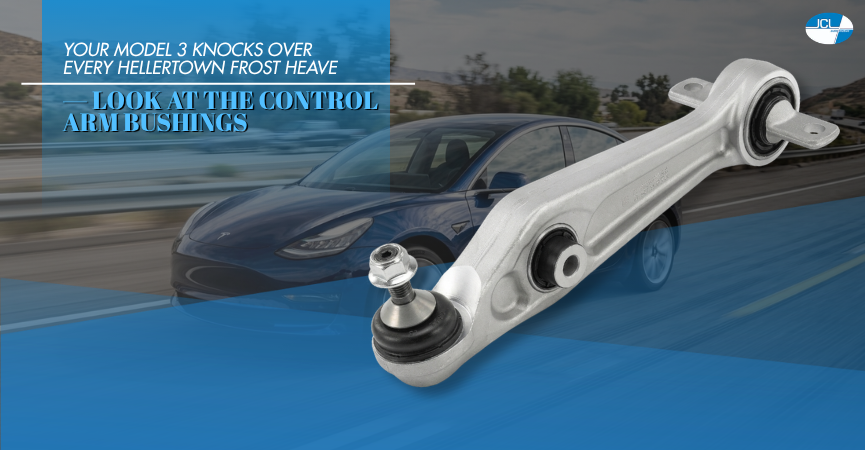
- Clunking over bumps usually points to a worn control arm bushing or ball joint, not just shocks.
- Mercedes AIRMATIC air suspension failure causes one corner to sag visibly and requires Mercedes-specific diagnostic tools to diagnose properly.
- Worn suspension accelerates tire wear — you may be replacing tires more often than necessary if the suspension has not been checked.
- All suspension repairs at JCL Automotive include a full inspection and are covered by a 24-month/24,000-mile nationwide warranty.
Top Rated European Auto Suspension Service & Repair Shop for Hellertown Drivers
If your car is bouncing more than it should, pulling toward the shoulder, or making a dull thunk every time you hit a pothole, your suspension system is trying to tell you something. At JCL Automotive in Hellertown, PA, we have been diagnosing and repairing suspension systems on Audi, BMW, Mercedes-Benz, and Tesla vehicles since 2005. We use the same factory-grade diagnostic tools your dealership uses — and we back every repair with a 24-month/24,000-mile nationwide warranty. Our ASE-certified technicians know European suspension inside and out, and we will tell you exactly what needs to be fixed before a wrench is turned.
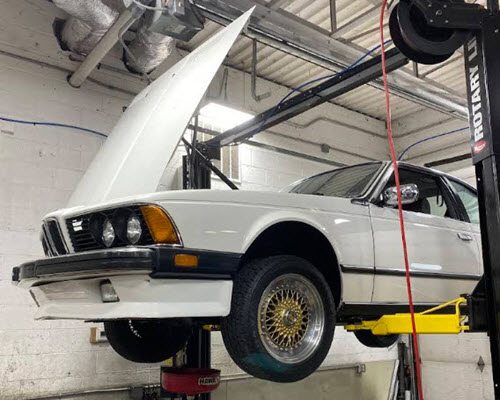
Quality Service for the Top European Brands
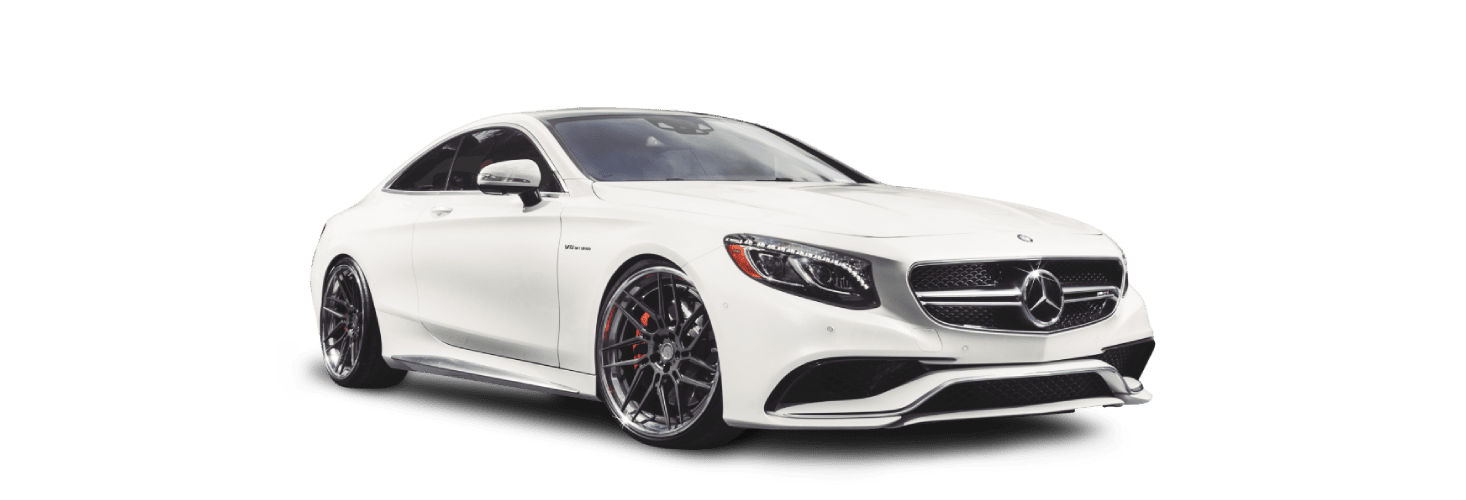
At JCL Automotive, our certified mechanics have decades of experience working with European vehicles. We welcome domestic & foreign cars but specialize in all models of:

What Does Your Suspension System Actually Do?
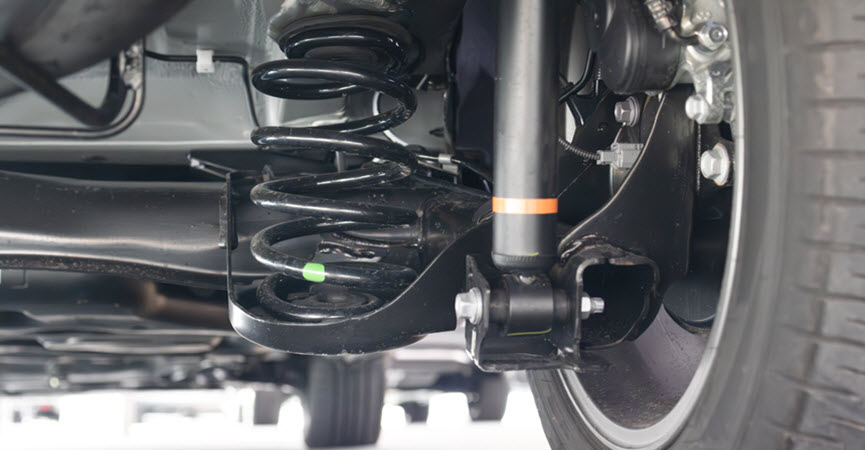
The suspension connects your car’s body to its wheels. It absorbs the impact from road irregularities, keeps all four tires in consistent contact with the pavement, and gives you control over steering and braking. It includes shocks, struts, coil springs, control arms, ball joints, tie rods, sway bars, and wheel bearings.
European vehicles are built for precise, high-performance handling. That means suspension components are engineered to tighter tolerances — and when they wear, you feel it faster. A BMW that used to carve corners now feels vague. An Audi that once tracked perfectly now drifts. That early feedback is actually an advantage: it tells you a problem exists before it becomes a safety issue.
What Are the Warning Signs of Suspension Problems?
Any of the following symptoms means your suspension deserves a look:
- Excessive bouncing after hitting a bump — the car keeps moving up and down instead of settling
- Pulling to one side while driving on a straight, level road
- Clunking or knocking sounds when going over bumps or turning
- Uneven or feathered tire wear across the tread
- Nose-diving sharply under braking
- One corner of the vehicle sitting noticeably lower than the others
Driving on worn suspension is not just uncomfortable — it puts extra stress on your tires, brakes, and steering components. What starts as a nuisance becomes a more expensive repair the longer you wait.
Suspension Repair for Audi, BMW, Mercedes & Tesla: What We See
Every platform has its own suspension architecture, and each one develops predictable failure patterns. Our technicians are familiar with all of them.
BMW
F-series and G-series models frequently wear through front strut mounts and control arm bushings. Vehicles with EDC (Electronically Controlled Damping) can fail at both the module and the physical component — you need diagnostic tools that read EDC fault codes to tell the difference. Guessing wastes time and money.
Audi
Models equipped with Magnetic Ride Control use magnetorheological fluid-filled shocks that are expensive to replace and should not be deferred. On quattro all-wheel-drive models, any alignment change affects all four corners simultaneously — which is why a proper alignment rack and trained technician are essential for every repair.
Mercedes-Benz
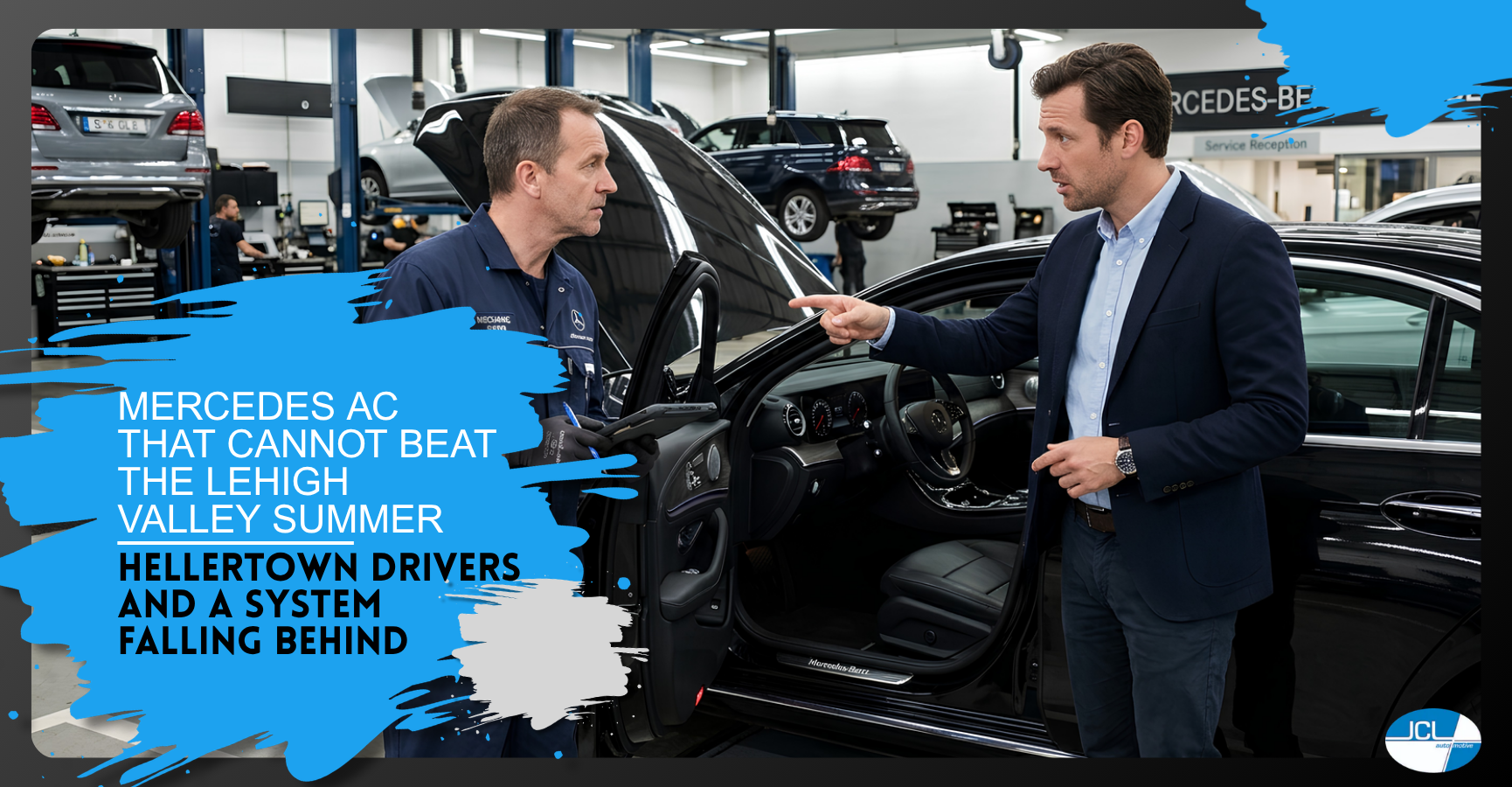
AIRMATIC air suspension, found on the E-Class, S-Class, GLE, and GLS, uses pneumatic air struts and a central compressor. Compressor failures and air strut leaks are the most common faults. One corner of the car will sag noticeably. Proper diagnosis requires Mercedes-specific scan tools — not a generic code reader.
Tesla
Model S and Model X use air suspension that is prone to compressor and ride-height sensor failures. Model 3 and Model Y use a conventional coilover-style setup that is simpler to service but still requires careful four-wheel alignment after any component replacement to preserve driving range efficiency.
How JCL Automotive Handles Suspension Service
Every suspension visit starts with a full inspection, not an assumption. We check all suspension and steering components for wear, looseness, and damage. We perform an alignment check and road-test the vehicle before and after the repair. We give you a written estimate before work begins — always.
While you are in, it is worth noting that suspension wear often coincides with brake wear. We offer brake repair in Hellertown and can inspect both systems on the same visit to save you a trip.
If your Audi has been pulling or wearing tires unevenly, our Audi repair specialists have the quattro-specific alignment experience and tooling to address it correctly.
We serve customers from Hellertown, Allentown, Bethlehem, Easton, and Quakertown. If you are coming from the Bethlehem area, our European auto repair near Bethlehem page has details on what to expect.
All parts and labor are covered by our 24-month/24,000-mile nationwide warranty. Same-day service is available whenever scheduling allows.
Schedule Your Suspension Inspection at JCL Automotive
Call us at (484) 851-3390 or stop by 70 Main Street, Hellertown, PA 18055. We are open Monday through Friday, 8:30 AM to 6:00 PM. Same-day service is available when scheduling allows. We serve Hellertown, Allentown, Bethlehem, Easton, and Quakertown.
Frequently Asked Questions About Suspension Repair
What are the signs of bad shocks or struts on a European car?
The most common signs are excessive bouncing after bumps, a nose-dive sensation when braking hard, body sway or roll in corners, and uneven tire wear. On European performance vehicles, steering precision often degrades before ride quality noticeably worsens — the handling starts to feel loose or imprecise before the car becomes obviously uncomfortable.
Can I keep driving with bad suspension?
It depends on how severe the problem is. A slightly worn shock absorber is not an immediate emergency, but a broken spring, failed air strut, or loose ball joint is — these can cause sudden loss of vehicle control. Even moderate suspension wear accelerates tire wear and stresses brakes and steering components. We recommend having any suspected suspension issue inspected as soon as possible.
How often should suspension be inspected on a BMW or Audi?
We recommend a suspension inspection every 30,000 miles, or any time you notice pulling, clunking, or uneven tire wear. BMW and Audi do not always publish specific suspension replacement intervals the way they do oil change schedules — which means wear can accumulate quietly between services. The simplest habit is to have it checked during your next scheduled maintenance visit.
Does a European car need brake fluid flushed more often than a domestic car?
Generally yes. BMW, Audi, and Mercedes-Benz specify brake fluid replacement every two years, regardless of mileage — more frequent than the three-year or 45,000-mile intervals common on domestic vehicles. European vehicles operate at higher brake temperatures, and degraded fluid lowers the boiling point of the system. Brake fade at high temperatures is a real risk if fluid service is deferred.
Does JCL Automotive offer free brake inspections?
Yes. If you’re hearing noise or experiencing any change in brake pedal feel, bring your car in, and we’ll inspect the brake system at no charge. We’ll measure pad thickness, check rotor condition, test brake fluid quality, and inspect the calipers. You’ll get a clear written estimate if repairs are needed — no pressure, no hidden fees, just an honest assessment from technicians who specialize in European vehicles.